-
Two rides, two stories from Spain
I have a small habit: when I get into an Uber or a Bolt in a new place, I try to start a conversation. Sometimes I get silence. Sometimes I get a whole life story between the airport and the hotel. This time I got two.
The first ride was with a middle-aged woman from Venezuela. She earns about 400 euros a month, so she shares a flat with other people - a place of her own is simply out of reach. Still, when I asked how life in Spain compares with life back home, she did not hesitate. There is no comparison, she said. Corruption and a collapsing economy were bad enough, and then an earthquake came on top. Spaniards, she said, are friendly and warm toward newcomers, and the cultures are more alike than you would expect.
The second ride was in Madrid, with a young man from Morocco who spoke excellent English. There is so much demand for drivers that he keeps getting new offers and has to turn some down. In his view, Spaniards aim for other professions, so hotels, restaurants and rideshare apps lean heavily on people like him. Back home, he said, the problem is corruption. Morocco is a phosphate giant, but the money rarely reaches ordinary people. So young people leave.
Then we drifted to a bigger subject: families. He was convinced that Spain will have to accept immigration whether it likes it or not, and that Spanish women put career and personal growth first. He sees traditional roles as something that once served a purpose, and he reads the popularity of the "tradwife" trend as a response to something missing in society.
I keep hearing versions of this story from many places, not only from these two drivers. So I checked what the numbers say.
The core of it is real. Spain's fertility rate was 1.10 children per woman in 2024, one of the lowest in the world. Women have their first child at around 31-32, and young Spaniards leave their parents' home at about 30, compared with 26 in the EU as a whole.
But the numbers do not tell the story he told. Surveys show that Spaniards still want about two children, the same as a few decades ago. The main reasons they do not have them are the lack of a partner and the lack of stability: housing, work, money. That is not a story about women who stopped wanting families. It is a story about people who cannot afford to start one at the age when they would like to.
Divorce is a similar case. It is often said that Spain has the highest divorce rate in Europe, but in 2024 it was 1.8 per 1000 inhabitants, slightly below the EU average. Latvia, Lithuania and the Nordic countries are higher. What has changed more is that fewer people marry at all. As for women being less happy, I found no data that supports it. Across the EU the gap in reported happiness is small.
Still, something is clearly shifting in how people build lives and relationships, and it is worth talking about. I would just rather blame the housing market than half of the population.
What stayed with me is the mix of things. Life in Spain is not easy for either of my drivers, yet both talked about it as a step forward, and both were generous with their time. I told them a bit about Poland, where we are also meeting more and more people from South America, and it felt like we were describing the same big story from different ends.
-
Your Score, Please

There's a concept that tends to make people visibly uncomfortable the moment it comes up in conversation: the social credit score. Most of us associate it with China - a surveillance-heavy system that rewards compliant citizens and penalizes troublemakers. The reaction in the West is almost reflexive: dystopian, Orwellian, deeply wrong.
And yet. Here's the uncomfortable part.
We already live inside a scoring system. We just didn't vote for it, can't see it, and have absolutely no say in how it's used. Every search query, every click, every purchase and pause and scroll feeds into profiles that Google, Meta, Amazon, and Apple have been building about us for years. The data exists. The social graph exists. The difference is that it belongs to them, not to us - and it's used not to protect us, but to sell to us, manipulate us, predict us.
So my provocation is this: what if the problem with social scoring isn't the concept itself, but who controls it, and for what purpose?
I'd like to imagine a different kind of profile - one that's open, transparent, and ours. Not a punishment mechanism, not a surveillance tool, but something closer to a public CV for the human being behind the screen. What do you believe in? What causes do you support? What's your relationship with work, with free time, with the environment? Where do you stand on the issues that actually shape the world we share?
I've grown skeptical of anonymous social media. The architecture of Twitter and its cousins was always a little broken - a throwaway email, a SIM card bought for cash, and suddenly you have a platform from which to harass, deceive, or manipulate with near-zero accountability. I find myself genuinely hoping the European Union builds something better. A digital identity layer that actually ties accounts to real, breathing people. Not to control speech, but to give words their proper weight.
Ray Dalio - that's the name I was reaching for - the founder of Bridgewater Associates and author of Principles - runs his company partly on the idea that everyone has a visible "believability profile": a map of what they know well, where they're less reliable, and what experience they're drawing from. Decisions get made with that context in mind. I think there's something honest about that. We should all have the courage to stay quiet on topics we genuinely don't understand. That kind of epistemic humility probably shouldn't be a private virtue - it should be visible, social, normalized.
None of this is simple. An open identity system can be abused just as easily as a closed one - maybe more so. The line between transparency and exposure is real, and it moves depending on who's in charge. But I keep returning to the bigger picture: we live in an era of planetary problems that no single nation can solve alone. Climate change, mass migration, the slow erosion of democratic norms by populist actors who exploit the chaos of anonymous information environments - these aren't problems that yield to national solutions or individual opt-outs.
Maybe a world that's a little more legible - where people are a little more accountable for what they say and who they are - is part of what getting through this century actually requires.
It's a trade-off, yes. But so is everything worth having.
-
Can a Single Conversation Shake the World?
My Spanish teacher asked me something the other day that I haven't been able to shake. Is it true, she said, that Europe doesn't want Russians anymore?
Something stirred inside me. A rush of thoughts, tangled and contradictory, all arriving at once.
She's not wrong. Many European countries have, in one way or another, closed their doors to Russian citizens. It's a kind of collective embargo — one society imposing informal sanctions on another that appears, at least from the outside, to be passively endorsing a war waged against a neighbor who did nothing to deserve it. And yet, the moment you say that out loud, you bump into an uncomfortable truth: collective punishment is still punishment. What exactly has the individual Russian done — the one quietly packing a suitcase, hoping to get out — to deserve being turned away?
It's a question that doesn't have a clean answer.
And here's where my mind did something strange: it drifted to a completely different group of people. The migrants who've arrived from across the Middle East into Germany, France, Belgium — seeking, as they often say, a better life. Only they don't always come intending to become German or French. They carry their whole world with them: their customs, their clothes, their sense of identity. In some cases, deeply troubling practices follow too. Female genital mutilation, for instance, does occur in European countries — it's not a hypothetical — and that can't be glossed over. But here's the thing: there is no war driving the comparison. The situations aren't equivalent. And yet they rhyme in a way that feels worth examining.
So back to Russia.
Russia — and I find myself speaking about it as though it were a single person, a woman, cold and deliberate — launched an attack on what was, in any honest reading, an innocent neighbor. What is happening in Ukraine right now will take generations to fully understand, just as it took decades for the full horror of World War II's crimes to be documented, named, and reckoned with. Those who have already read survivor accounts from Ukraine know: what's come out so far is only the beginning. What eventually surfaces will stop future generations cold.
And yet — Russia's streets, when filmed, show citizens who either speak adoringly of President Putin or reach for familiar justifications: Ukraine is run by Nazis, the West is the aggressor, the operation is necessary. These are the slogans. The same architecture of language that ordinary Germans once used while their government committed atrocities next door.
Then I thought of Metro 2033 — Dmitry Glukhovsky's novel, though for a moment the name escaped me. In it, the great enemy is a species of dark mutants climbing down to the human-inhabited tunnels of the Moscow metro. Born from humanity's own catastrophic mistakes after a nuclear war, these creatures are adapted, evolved — and, it turns out, they're trying to reach out. They want connection. Understanding. And there's one scene, brief and aching, where it almost happens. Where a single human almost sees through their eyes. Almost.
It's that "almost" that stayed with me.
Because maybe — and I'm aware this sounds counterintuitive — the answer to the question my teacher posed isn't to close the door on Russians, but to fling it open wider. Invite them. Not reluctantly, but enthusiastically. Let them see the world through our eyes, and let us, genuinely, try to see through theirs.
I've thought for a while that the only real solution to the immigration anxieties gripping Europe and the United States alike isn't stricter borders — it's deeper integration. Mixing. The kind of proximity that makes someone else's pain feel closer to your own. When understanding isn't something you encounter on a screen, but something you reach across a table for, things shift. Slowly. Imperfectly. But they shift.
Maybe that's how worlds actually shake — not from the outside, but from within, one almost-moment at a time.
-
When Do We Really Start to Age?
 Is aging just about the physical changes—fading memory, misplaced keys, or the slow return to childlike dependence? Of course, biology plays its part. Our brains change, our reflexes dull, and the world starts to feel like a place we’ve already seen, already understood. But what if the real aging begins not in our cells, but in our minds?
There’s a moment—subtle, almost invisible—when we start to believe we’ve figured it all out. We’ve built our model of the world: how things work, what we like, what we fear, which side of the bed feels right, what music soothes us in the evening. We spend our early years assembling this puzzle—first the physical world, then ideas, then the people and places that shape us. We craft an inner world, too: our tastes, our habits, our unshakable convictions. And then, without realizing it, we decide the puzzle is complete.
That’s when the trouble starts.
Because once we’re convinced our model of the world is finished, we stop growing. We stop learning. Instead of expanding our understanding, we start fortifying it, seeking out only what confirms what we already believe. The world outside becomes a mirror, reflecting back our own biases, our own comforts. We grow cautious, critical, even a little lazy. We mistake familiarity for truth.
So how do we resist this? How do we keep from hardening into versions of ourselves that no longer evolve?
Perhaps the answer lies in questioning—constantly. In chipping away at the walls of our own certainty. In seeking out experiences that challenge us, not just entertain us. Travel, yes, but not the kind where we carry our old habits into new places. Real travel means confronting the unfamiliar, letting other cultures, other ways of life, shake the foundations of what we think we know.
It sounds exhausting, maybe even a little mad. But what’s the alternative? To live in a world that grows smaller with each passing year, a world where everything fits neatly into the boxes we’ve built?
-
The Loudest Voices in the Room
 Over time, I’ve found myself increasingly troubled by a certain kind of person—the kind who speaks with absolute certainty, whose opinions are unshakable, and who seems to thrive in the public eye. It’s a chicken-and-egg question: Do these individuals seek out platforms because they crave validation for their strong views? Or do platforms, hungry for engagement, amplify voices that are the loudest, regardless of their depth?
What I’ve noticed—what disturbs me—is how often the loudest voices belong to those with the least to say. The genuinely knowledgeable tend to grow more humble with age. They recognize the limits of what they know. They understand that wisdom isn’t about having all the answers, but about asking the right questions. Yet the opposite seems true for those who shout the loudest. Their confidence isn’t built on expertise or nuance, but on the sheer force of their conviction. And too often, that conviction is untethered from facts.
We live in an era where populism thrives, where volume is mistaken for virtue, and where strong opinions can drown out reasoned debate. Anti-vaccination rhetoric, for example, finds fertile ground not among experts, but among those who crave simple answers to complex questions. These voices, armed with little more than certainty, can unravel years of research, erode trust in institutions, and leave chaos in their wake.
What’s worse is how pervasive this phenomenon has become. You see it in politics, in media, even in casual conversations. The more someone insists they’re right, the more I find myself questioning not just their arguments, but their motives. Humility, to me, has become a litmus test for knowledge and potentially—for intellect. When someone admits they don’t know everything—or that they might be wrong—I listen. But when someone speaks with unearned authority, I can’t help but wonder: What are they trying to prove?
Perhaps it’s a sign of the times. In a world overflowing with information, it’s easier to cling to bold, unnuanced claims than to grapple with uncertainty. But real progress hasn't been made by those who refuse to doubt themselves. It’s made by those who ask, who listen, and who are willing to change their minds.
So I find myself drawn to the quiet thinkers, the ones who speak softly because they’ve spent years learning how much they don’t know. And I can’t help but wish more of us would follow their lead.
-
The Unseen Cost of Rules: How Permission Stifles Innovation
 Lately, I’ve been thinking about why so much of the world’s innovation seems to come from the US. It’s not that other countries lack talent or ambition—far from it. But there’s something about the way societies are structured that either fuels or stifles creativity. And I wonder if the answer lies in the rules.
Not all rules are bad, of course. Many exist to protect rights, ensure fairness, and uphold justice. But what happens when the sheer volume of rules—both necessary and unnecessary—starts to shape how we think? When the first question isn’t “What can I create?” but “Am I allowed to do this?”
In the US, there’s a cultural tendency to act first and ask for permission later. People dive into projects, build things, and only later worry about whether they’ve crossed a line. That mindset fosters a kind of fearlessness. It’s not that obstacles don’t exist; it’s that they’re often seen as challenges to overcome, not roadblocks to halt progress. And that attitude, I suspect, is why so many young people there end up doing remarkable things. They start with “Why not?” instead of “What if I can’t?”
Contrast that with the EU, where the first instinct—at least in my experience—is often caution. When I joined AI development studies here, one of the first things we discussed wasn’t “What can we build?” but “What are we not allowed to do?” The focus wasn’t on possibility; it was on limitation. And that’s a dangerous place to start. Because when you begin with “but,” when your first thought is “Is this legal?” or “Will this be approved?”—you’ve already put a ceiling on your own potential.
Don’t get me wrong: rules matter. Protecting citizens, safeguarding minorities, ensuring ethical standards—these are all crucial. But somewhere along the way, the balance tips. The red tape, the bureaucracy, the endless layers of “you can’t” start to overshadow the “what if?” And that’s how you end up shooting yourself in the foot before you’ve even taken a step.
Innovation thrives where there’s room to experiment, to fail, to adapt. It’s not about ignoring rules; it’s about not letting them dictate what’s possible before you’ve even begun. The question isn’t just “What are the boundaries?”—it’s “How far can we push them?” And maybe, just maybe, that’s the difference between a society that dreams and one that does.
-
The Power of Resistance

There’s a theory in psychology called Reinforcement Theory that speaks volumes about the role of resistance in growth. It’s a simple but profound idea: our world is built on the pursuit of the easiest path. We optimize, we streamline, we look for shortcuts—because, like water, we naturally flow where there’s the least resistance. The solutions that stick are the ones that require the least effort, the ones that fit seamlessly into our lives.
But here’s the catch: the things that truly matter—learning a new language, mastering an instrument, building a skill—rarely come easy. They demand that we go against the grain, that we push through discomfort. Learning a new language, for example, isn’t something our brains do naturally. It means forging new neural connections, wrestling with unfamiliar grammar, and memorizing words that don’t yet feel like our own. It’s hard. And that’s exactly why so few of us stick with it.
Yet, we know from behavioral science how powerful reinforcement can be. Think of how animals learn through rewards: a treat for a trick, praise for obedience. Over time, what starts as a hesitant action becomes second nature. The question is, how do we create that same transformation in our own lives? How do we turn something that feels like a struggle—whether it’s practicing piano scales or conjugating verbs—into something as effortless as breathing?
The answer lies in finding that sweet spot—the moment when the resistance starts to fade, when the effort begins to feel less like a chore and more like a calling. It’s the point where we stop counting the hours and start losing ourselves in the process. But getting there isn’t just about willpower. It’s about designing our environment and our habits to work for us, not against us.
We talk a lot about motivation, but not enough about the mechanics of making hard things feel inevitable. How do we choose what’s good over what’s easy? How do we make healthy habits as automatic as reaching for our phone? I suspect the key is in leveraging both internal and external reinforcements—building routines that reward progress, surrounding ourselves with cues that nudge us forward, and celebrating small wins until they add up to something extraordinary.
Because here’s the truth: mastery isn’t about avoiding resistance. It’s about learning to dance with it, to let it shape us into someone who doesn’t just do the hard things, but craves them. That’s when the magic happens—when the struggle becomes the path, and the path becomes who we are.
-
The Power We Don’t See: Stories That Shape the World
 Yuval Noah Harari often writes that what truly sets humans apart is our ability to create shared stories. Not just to invent them, but to believe in them together. In many ways, this collective storytelling might be humanity’s greatest strength.
Stories allow us to build things bigger than ourselves. They help us unite around goals that go beyond individual needs or personal ambition. And it struck me recently that we tend to underestimate the stories we encounter most often in our daily lives—films, and the narratives carried by music.
Both have an unmistakably global reach. Their messages travel far, crossing borders with ease, becoming viral long before we had a word for it. A Michael Jackson song can be heard both in the United States, where it was created, and in a small hut somewhere in Africa. Its message—emotional, rhythmic, human—can be understood in both places. And with repetition, those messages settle in. Values that begin as local slowly become global.
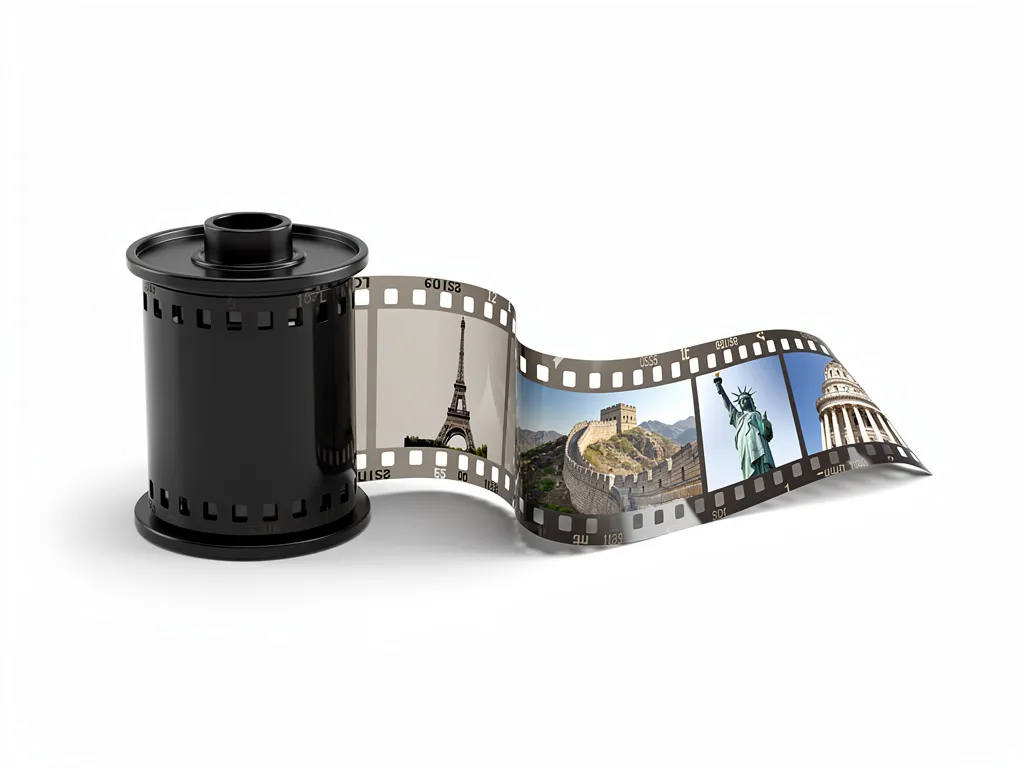
The same is true for films. Movies don’t just entertain; they transmit ideas. Through the magic and emotional force of images, they embed those ideas deep in our minds. I sometimes think that films played a quiet but powerful role in the great migrations and social shifts at the turn of the 20th and 21st centuries. They carried promises of a better world, a better life. It’s hard to tell someone living in a war-torn region of the Middle East to ignore what they see on the screen and accept that it’s all an illusion. Just as it’s hard to convince a farmer facing drought that the lush landscapes shown in films aren’t real possibilities somewhere else.
The power of images, the magic of music, and their global reach make them forces far greater than we usually acknowledge.
This becomes especially interesting when we think about how superpowers are built—not only through economics or military strength, but through perception. Hollywood and American film productions have played an enormous role in shaping the image of the United States as exceptional, powerful, and central to the world’s story. In films, it’s the U.S. that fights alien invasions, makes groundbreaking discoveries, and takes on extraordinary missions. These narratives repeat themselves so often that they become familiar truths.
That’s why visiting places like New York, Chicago, or Washington can feel strangely emotional. We’ve seen them hundreds of times on screen. We’ve “been there” long before we ever arrive. These are global stories, planted in our minds in childhood, repeated and reinforced for decades.
And this brings me to Europe.
If we seriously think about building a stronger, more unified Europe—about a true “Europe First” mindset—it’s hard to avoid one conclusion: we need shared stories. We need common narratives that connect us as Europeans and project a sense of identity and purpose beyond our borders. We need places, systems, and creative forges where such stories can be born.
Because power today is not only about what you have. It’s also about the stories the world believes about you—and the ones you tell about yourself.
-
Finding Europe’s voice in a world of giants
 Let’s be honest - Europe is a patchwork of states. Countries, if you prefer. And as long as that’s the case, it simply can’t compete. Not with the heavyweights reshaping the global order: the US, Russia, or China. Without a clear, unified identity, without acting as one, Europe will struggle to matter - economically, politically, or in terms of real influence.
We’re fragmented. The United States is also a collection of states, but there, everyone plays for the same team. How often do you see a product, a university, or a company presented as anything but Made in USA? It’s a point of national pride, a core part of their identity, and - let’s face it - a source of strength. A united nation is a powerful one. Europe’s only shot at thriving in this new world order is to adopt a similar mindset. Otherwise, we risk being outmaneuvered, undermined, or worse - reduced to a footnote in history, a vassal state of some larger power.
This isn’t about Europe being weak. Far from it. The issue is that the model we’re built on no longer fits the times. Either we reform - shifting from a community of nations to a nation of communities - or we fade into irrelevance, a relic overshadowed by superpowers.
But here’s the thing: the choice isn’t just up to politicians or corporations. It’s up to us, the citizens. Will we cling to our narrow, local interests? Will we resist the idea of a stronger European Union, insisting that “Brussels has no right to tell us what to do”? Will we keep defaulting to American products because the European alternatives seem inferior - even though they’re fighting with one hand tied behind their back, lacking the scale and unity to truly compete?
I often talk about circles of influence. This is where ours begins: with the decisions we make every day. Choosing a European streaming service over Netflix, supporting a homegrown AI like Mistral instead of defaulting to ChatGPT, or opting for a local electric car over a Tesla - these aren’t just personal preferences. They’re votes for the kind of future we want. Each choice either strengthens Europe’s position or reinforces its fragmentation.
The strongest country on our continent isn’t France, Germany, or Poland. It’s Europe - or at least, it could be. But only if we start acting like it.
-
Finding space for happiness
My friend shared an illustration with me recently - a child standing face to face with a polar bear, with the words: “I hope you find time to be happy, not just strong.”
It stayed with me longer than I expected. Maybe because strength is a language many of us speak fluently by now. We fall back into it almost automatically, as if it were the only safe mode we have left. When life pushes, we tighten our grip. When something hurts, we straighten the spine. We keep going. And going. And going.
Somewhere along the way, being strong stops feeling like a choice. It becomes a rule we obey without even noticing: You cannot allow yourself to be anything else but strong. The “but” is important here. It’s a door we quietly close on ourselves.
And after enough years of that, strength grows so large it fills the whole room. It expands, takes over the corners, the ceiling, the floor. It becomes the entire architecture of how we function. And when that happens, there’s barely any space left for happiness to sit down comfortably. Not because we don’t want it. But because strength has claimed all the real estate.
Maybe that’s why that little drawing felt so disarming. It was a reminder - that being strong isn’t the whole story. That we could, from time to time, carve out a little pocket of space for joy, even if strength is still standing guard nearby.